
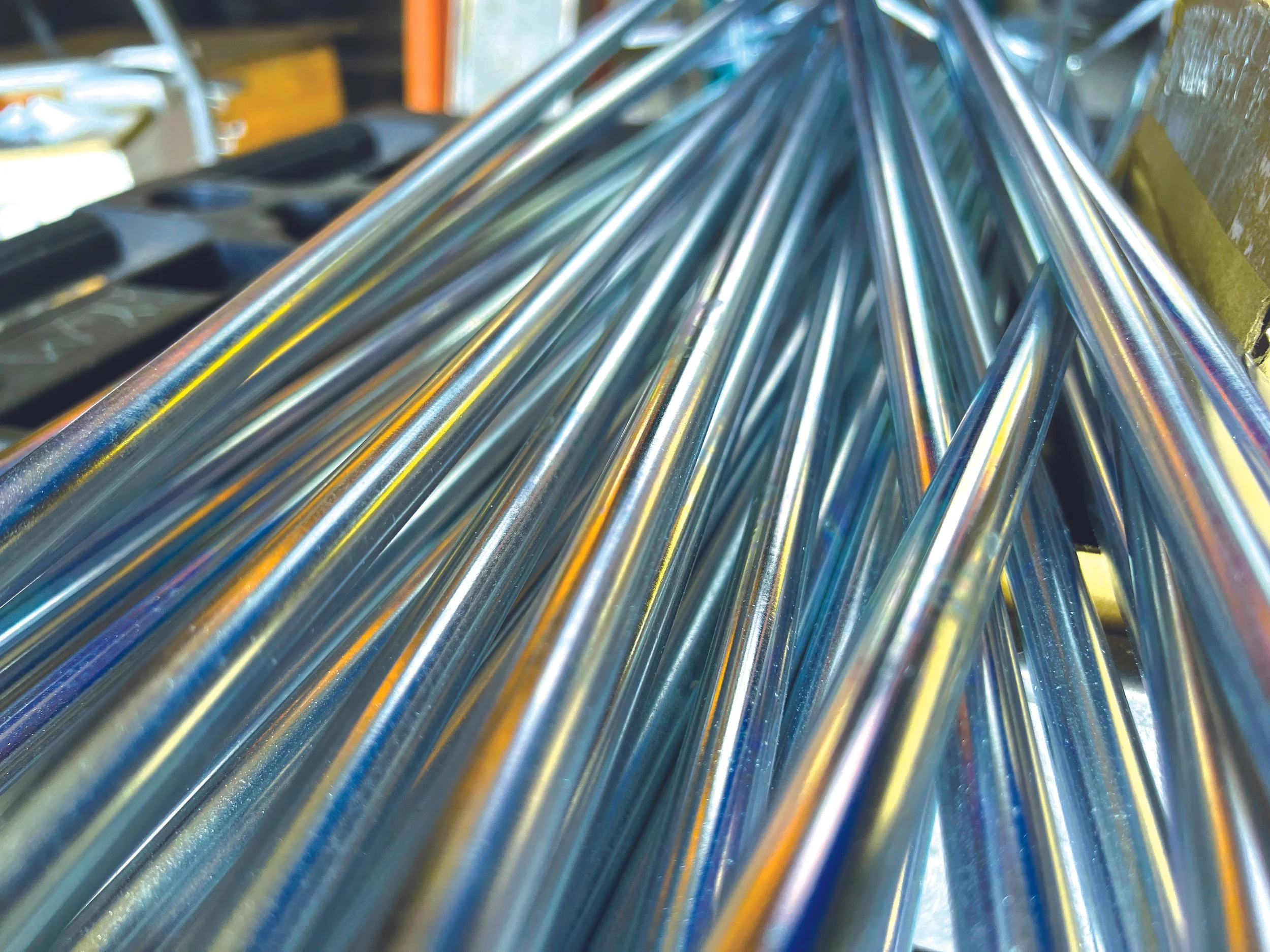
Zinc Electroplating
Sizes up to 24" x 132" x 36"
ASTM B633 Type III corrosion protection
Non-hexavalent chromate for a safer finish
Clear/blue zinc with an iridescent lustre
CoC available on request
Per-piece estimating
7–10 business day turnaround on most jobs
Expedite available
Local pickup* & delivery available
*greater Yakima area.
Zinc Electroplating FAQs
-
What is zinc electroplating, and how thick is the coating?
Zinc electroplating is one of the most cost-effective ways to prevent rust. It protects sacrificially, so if the surface gets scratched, the zinc corrodes first and the steel underneath stays protected.
The chromate (or passivate) forms a passive layer over the zinc that delays the white corrosion bare zinc develops on its own.
Typical coating thickness runs 0.0002" to 0.0005" (5–12 microns), depending on the specification.
-
What zinc finishes do you offer?
Clear/blue zinc, certified to ASTM B633 Type III, plated with a non-hexavalent (trivalent) chromate which means no Cr(VI) in your supply chain. The finish carries an iridescent-to-blue sheen.
ASTM B633 Type II yellow is currently in testing.
-
What is ASTM B633, and what does Type III mean?
ASTM B633 is the standard specification for zinc coatings on iron and steel. It defines coating thickness by service condition class, and the type of chromate conversion coating applied over the zinc.
Type III is a colorless (clear/blue) chromate. It requires a minimum of 12 hours of salt spray testing — an accelerated corrosion test that measures how well a finish holds up. Our most recent testing exceeded 24 hours.
-
Why doesn't your zinc plating have a high-shine, mirror finish?
While all types of zinc plated parts will have similar corrosion protection, the processes can use different chemistries that don't all look alike.
The common acid zinc process will level as it plates: its additives fill the microscopic texture of the steel, so the finish comes out smoother than the surface it plates to.
Ours doesn't level, instead it closely replicates the surface it's given. Shinier machined metal surfaces will plate brighter, and rougher/textured, hot- or cold-rolled mill finishes will have a more satin lustre.
Our process tends to plate a little bit more evenly, so recesses, threads, and blind areas will have hold closer to the same thickness and corrosion protection everywhere.
-
What is Type II?
Type II is typically a yellow/gold chromate that requires a minimum of 96 hours of white corrosion protection. Hexavalent chromate used to be the only option for this level of coverage, but now many trivalent chromate products combined with sealers can offer the same protection without the health and environmental hazards of hexavalent chromium.
Type II trivalent chromates can also come in a clear/blue.
-
My print calls out a customer specification, not just ASTM B633. What does that mean?
OEM specifications can often add requirements beyond the ASTM standard. That can mean an approved-source-only status for the plating facility, a specific thickness, a particular chromate type, and/or salt spray testing certified to that part.
We can tell you what the specification on your drawing requires and whether we can meet them.